Interlynk HR
Cuts a candidate's application from a 10-minute form to under 2 minutes, and gives hiring teams one board instead of five disconnected tools.
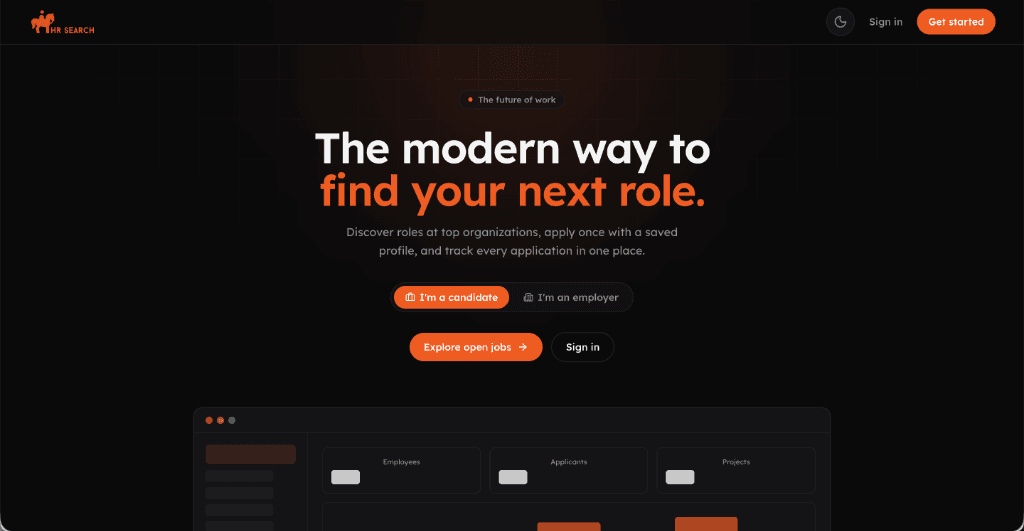
Hiring breaks down on both sides of the table. Candidates abandon applications that make them re-enter the same information for every role, and hiring teams lose track of who's where in the pipeline when tracking lives across spreadsheets, email threads, and a separate employee directory. Interlynk HR fixes both. Candidates build one reusable profile and apply to multiple roles in under two minutes instead of filling out a form from scratch each time, directly reducing the drop-off that happens mid-application. Hiring teams get a single pipeline board where moving a candidate from Applied to Interview is a drag-and-drop action that updates instantly, so a stage change made in a screening call shows up the moment the recruiter releases the mouse, not after a page refresh.
The application utilizes Next.js App Router with React Server Components for fast initial dashboard loads and SEO-optimized public landing pages. Client interactivity—including drag-and-drop applicant pipelines and dynamic filter facets—is powered by React 19 and TanStack Query with optimistic UI updates. Authentication routes through role-based access control (candidate vs. employer vs. admin). REST endpoints handle candidate submissions, resume metadata extraction, and real-time status notifications.
Unified Candidate-Employer Architecture
Chose
Single multi-role application platform instead of separate candidate portal and employer ATS
Why
Consolidating candidate profiles and employer dashboards in one codebase enabled shared design tokens, unified authentication, and frictionless transitions when company users apply to external roles or collaborate internally.
Trade-off
Demanded strict role-based data isolation at the API middleware layer to prevent cross-tenant access.
Pipeline State Management
Chose
TanStack Query optimistic mutations for applicant tracking stages
Why
Recruiters move candidates between stages (Applied → Screening → Interview → Offer) frequently. Optimistic UI updates ensure instantaneous drag-and-drop response without waiting for network round-trips.
Trade-off
Requires rollback logic and error toast handling if a stage update fails due to server-side validation or concurrency conflicts.
UI Component Architecture
Chose
Radix UI headless primitives styled with Tailwind CSS
Why
Ensured full keyboard accessibility (WAI-ARIA compliance) across complex modal dialogs, candidate dropdowns, and status badges while keeping the dark-mode aesthetic cohesive.
Trade-off
Requires configuring bespoke component wrappers compared to an off-the-shelf pre-styled UI kit.
Implement automated AI resume-to-job description semantic matching score
Add automated interview scheduling integration with Google Calendar and Outlook
Support enterprise custom hiring workflow stages and webhook notifications for Slack/Teams